Hike to Inti Punku and Machu Picchu: A Spiritual Journey through the Andes
Some destinations are visited, while others are experienced. The hike to Inti Punku and Machu Picchu definitely belongs to the latter category. For the Incas, Inti Punku—or "Gateway of the Sun"—was more than just a geographical name; it was the sacred threshold through which the rising sun announced each new cycle. Walking to this point today allows you to experience that magical moment that cannot be captured in a photograph.
If you're seeking an authentic alternative to the classic Inca Trail—a route combining history, spirituality, and nature without sacrificing Machu Picchu's majesty—this is your definitive guide.
What is Inti Punku, and what makes it so special?
Located 3,900 meters above sea level, Inti Punku is the eastern gateway to the Historic Sanctuary of Machu Picchu. Ancient Inca travelers and pilgrims crossed this gateway after several days of traveling along the Inca Trail. The first thing they saw upon crossing it was the citadel of Machu Picchu bathed in the light of dawn—a breathtaking sight.
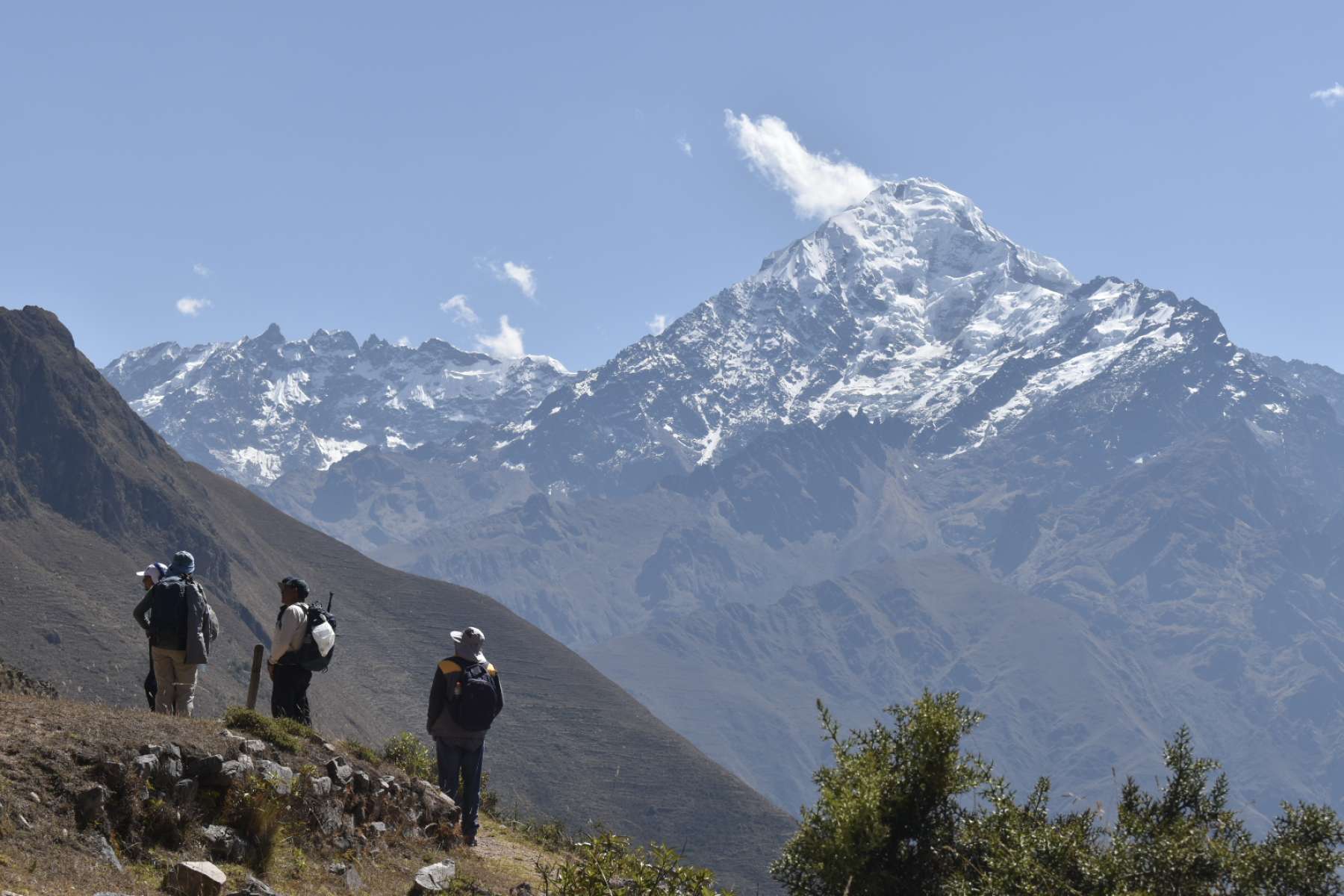
From the Inti Punku viewpoint, visitors can enjoy a 180-degree view of the Sacred Valley of the Incas, including the snow-capped Wakay Willka (also known as Veronica), the mighty Vilcanota River, and the cloud-shrouded peaks surrounding the citadel. In short, it is one of the most impressive viewpoints in Peru.
The Route: From Ollantaytambo to Inti Punku
The Inca Trail to Inti Punku begins in Ollantaytambo, one of the best-preserved archaeological sites of the Inca Empire. The trail is approximately eight kilometers long with a moderate ascent, making it ideal for intermediate hikers with no prior technical experience.
One of the most fascinating sites is the Cachicata quarry complex, where Inca architects extracted enormous blocks of pink granite that were transported with astonishing precision to the Temple of the Sun in Ollantaytambo. The half-carved blocks, work ramps, and traces of that colossal human effort remain intact there, silent witnesses to an extraordinary civilization.
The landscape gradually changes: cultivated fields give way to humid Andean forests where mist plays among quenuales and wild orchids. The biodiversity of the ecological corridor connecting the Sacred Valley and the jungle is another gift offered by this trail.
The ascent takes approximately three hours. At the end, you reach the Sun Gate, where the horizon takes center stage.
El Ritual: Mucho Más que una Caminata
According to Inca philosophy, mountains were considered living entities called apus. These apus were guardians that connected the world of the living (Kay Pacha), the upper world (Hanan Pacha), and the inner world (Uku Pacha). In this context, reaching Inti Punku was a significant achievement that involved showing respect and engaging in dialogue with the sacred.
At the viewpoint, a ritual offering is made to the Apu of snow-capped Veronica, an ancestral practice of gratitude that continues in Andean communities to this day and connects modern travelers with the invisible bond between humans and nature. This is an ideal time to meditate, breathe deeply, and give thanks.
Three-Day Itinerary: The Complete Experience
Day 1: Cusco, Inti Punku, and Ollantaytambo
The day begins early in Cusco. From there, we depart by private transport to the starting point of the route near the ancient Inca bridge over the Vilcanota River. After ascending and performing a ritual at Inti Punku, we begin our descent. We will spend the afternoon relaxing in Ollantaytambo, a town worth exploring for several hours on its own.
Day 2 — Machu Picchu: Wonder of the World
The train ride from Ollantaytambo to Aguas Calientes is a spectacle in itself. It takes approximately an hour and a half, and the landscape transitions from the dry Andes to the subtropical high jungle. The Vilcanota River accompanies us the entire way. From Aguas Calientes, a 30-minute bus ride takes us to the entrance of the Historic Sanctuary of Machu Picchu.
During the guided tour, we visit the citadel's temples, terraces, astronomical observatories, and sacred enclosures, revealing the Incas' sophisticated relationship between architecture, cosmology, and nature. In the afternoon, there is free time to explore the town's famous hot springs or enjoy the local cuisine.
Day 3 — Return to Cusco
After breakfast, the train will take travelers back to Ollantaytambo. From there, private transportation will take them back to the imperial city of Cusco. The body returns, but something of the spirit remains up there, at that gateway of light.
Practical Tips for Your Hike to Inti Punku
- Best time to visit: May to October (dry season). Clear skies maximize the views from the lookout point.
- Acclimatization: spend at least two days in Cusco before starting the trek to avoid altitude sickness.
- What to bring: layered clothing, a lightweight raincoat, sunscreen, hiking poles, energy foods, and at least two liters of water.
- Footwear: hiking boots with good grip, essential on wet sections.
- Permit: No special permit is required for this route, unlike the classic Inca Trail, making it more accessible as there is no maximum number of places.
Conclusion: A Door That Opens Inward
The hike to Inti Punku and Machu Picchu is more than just another place to check off on your list. It is a way of understanding the world in which every stone has a memory, every mountain has a sacred name, and the horizon is both a destination and a starting point. If you travel to Peru and want to have an extraordinary experience, visit the Sun Gate.