The Science Behind Megaliths: Debunking False Beliefs About the Construction of Sacsayhuamán.
Introduction: The Challenge to Gravity and Logic
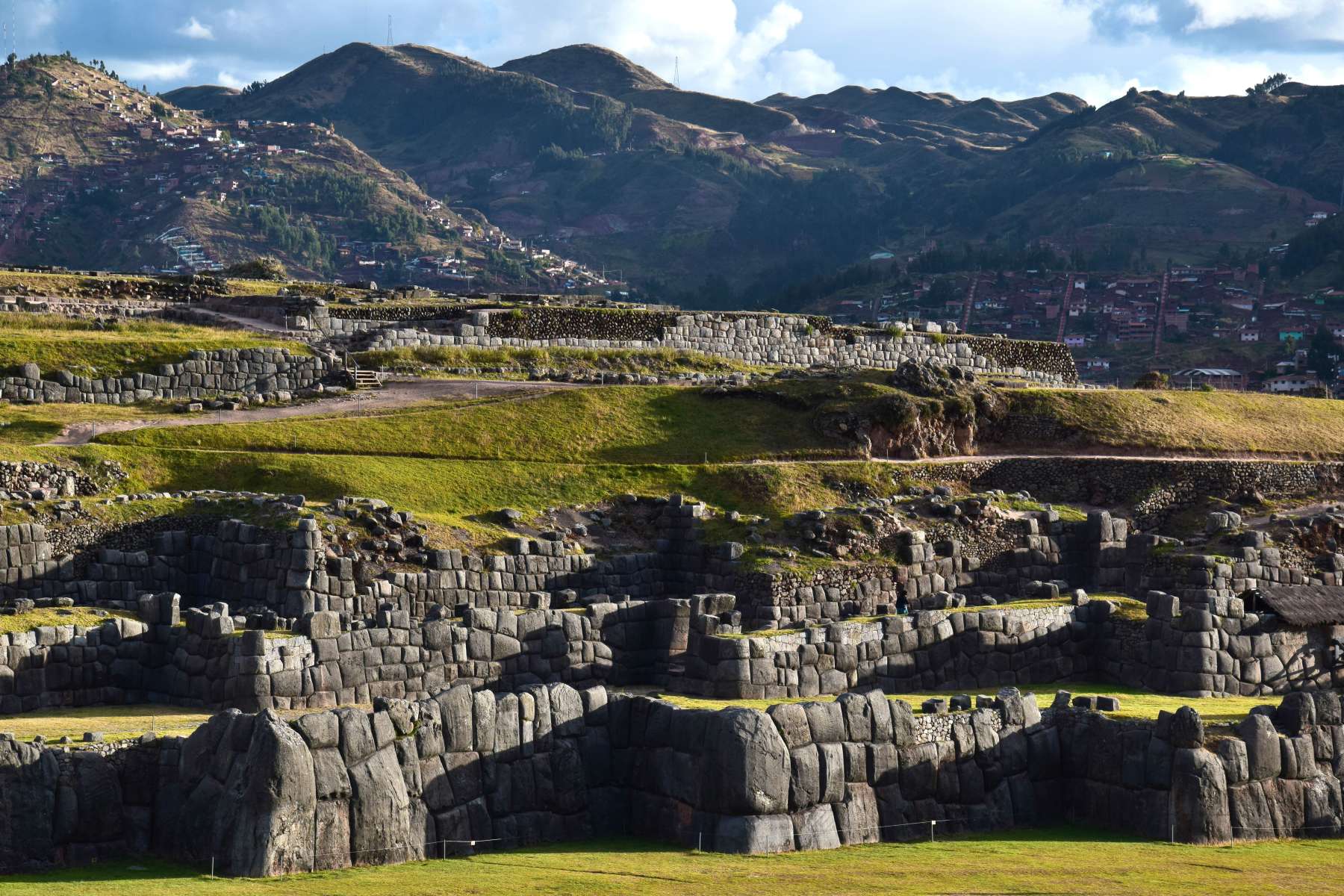
When you stand in front of the northern ramparts of Cusco, the impression is not only visual, but also physical. The stones of Sacsayhuamán, some weighing more than 120 tons, are not simply stacked blocks, but a display of geopolitical power and logistical capability. For decades, popular narrative has focused on the “inexplicable,” fueling theories ranging from extraterrestrial intervention to lost laser technologies. However, the reality, confirmed by modern archaeology and structural engineering, is far more fascinating than any fiction.
This article sets aside unfounded speculation to focus on what the lithic evidence tells us: Sacsayhuamán is the triumph of labor organization, geological knowledge, and an abrasion technique taken to obsession.
You can visit Sacsayhuamán with our tours in Cusco. Our guides will provide you with more information about this impressive work of Inca engineering!
"Machu Picchu Altitude"
Raw Materials: Geology and Identified Quarries
To understand the construction, we must first understand the material. Contrary to what many travel blogs suggest, the stones did not “appear” there. Petrographic studies have confirmed the exact origin of the blocks.
The gray limestone used for the foundations and outer walls comes from quarries in the same area, located a few kilometers away. However, the harder black andesite was used for fine details and interior structures and comes from the Rumicolca and Huaccoto quarries, located more than 15 and 20 kilometers away, respectively.
The real miracle is not magic, but logistics. Moving andesite blocks across rough terrain required an infrastructure of roads and ramps of compacted earth, as well as a system of vegetable fiber ropes (ichu or cabuya) capable of withstanding extreme tension. The confirmed theory suggests the use of wooden rollers on flat sections and dragging on beds of wet clay or lubricated pebbles to reduce the coefficient of friction on slopes.
The “Softening” Theory vs. The Evidence of Abrasion
One of the most widespread theories on the internet claims that the Incas possessed a plant or substance capable of “softening” stone until it became a moldable mass, which would explain the perfect fit. Although it is a romantic idea, there is no chemical evidence to support it in rock samples.
What has been found, and in abundance, are the tools used for the work: the jiwayas.
Jiwayas are high-density stone hammers (usually hematite or river stones with a high iron content) that are harder than limestone and andesite. The confirmed technique is percussion roughing. Inca stonemasons did not “cut” the stone as if it were butter, but rather struck it tirelessly.
The process consisted of three phases identifiable in the marks on the unfinished stones:
- Roughing: Heavy blows to give the general shape.
- Planning: Use of smaller hammers to smooth the faces.
- Abrasion and polishing: Use of sand and water, rubbing stone against stone to achieve the final finish.
The Secret to Perfect Lace: The Scribe Technique
The real question is: How did they manage to fit an 80-ton stone with millimeter precision onto another irregularly shaped stone without using mortar?
The answer lies in a technique known in engineering as “scribing,” but elevated to a monumental scale. Experimental archaeology, led by experts such as Jean-Pierre Protzen, has shown that it is not necessary to lift the upper stone repeatedly to check the fit.
The method worked as follows:
- The upper stone was placed on wooden blocks or earth, suspended just a few centimeters above the base stone.
- A tracing tool (probably made of wood or bone) was used to copy the profile of the lower stone's surface and mark it on the upper stone.
- The stonemasons struck and wore down the upper stone along this line.
- Gravity caused the upper stone to slowly descend until it fit into place.
The “perfect fit” is not airtight throughout the entire block. Studies using modern scanners show that actual contact occurs mainly at the outer edge, at a depth of between 10 and 20 centimeters. The center of the joint is usually concave, which facilitated settling and improved seismic stability by allowing some movement without collapse.
Seismic Engineering: Why polygonal shapes?
Aesthetics were not the only objective. The trapezoidal shape of the gates and the polygonal masonry (stones with multiple angles) respond to a vital need in the Andes: to withstand earthquakes.
The stones of Sacsayhuamán do not fight against the movement of the earth, but rather dance with it. With no rigid mortar to break, the stones can vibrate and rearrange themselves during an earthquake. The complex angles and the “meshing” between blocks prevent them from sliding horizontally, creating a self-supporting structure that becomes more stable the more it settles.
The Workforce: La Mita and Social Organization
Ultimately, the most advanced technology of the Incas was not a tool, but their social system. The construction of Sacsayhuamán, which lasted several decades (begun by Pachacútec and continued by his successors), was made possible by the mita.
This system of rotating labor taxes allowed for the organized mobilization of thousands of men (estimated at up to 20,000 during peak activity). They were not slaves whipped by the lash, but subjects who fulfilled a religious and state duty in exchange for reciprocity (food, clothing, chicha, and ceremonial festivals provided by the Inca).
Conclusion: A Human Triumph
Attributing Sacsayhuamán to beings from another world is, ultimately, to underestimate the capacity of human ingenuity. Scientific evidence shows us something much more inspiring: that through observation of nature, infinite patience, and collective cooperation, a civilization without steel or wheels (in terms of cargo transport) managed to tame stone in a way that our modern technology still envies.
Visiting Sacsayhuamán today is to witness the traces of those thousands of hematite hammers striking in unison to build eternity.