Cusco's Best-Kept Secret: Why the Salkantay Trail Will Change the Way You Travel
Of the many routes leading to South America's most famous archaeological sanctuary, there is one that defies convention and encourages deep introspection. This is the Apu Salkantay Ritual Trek, which transcends the boundaries of a mere physical expedition to offer an authentic Andean pilgrimage experience. Departing from the popular routes and familiar stories of other standard tours, this five-day trek offers a genuine dialogue with the rugged terrain and imposing rock formations that characterise the Cusco region.
Those who choose this route are not just looking to take a photo at the end of the trail; they are seeking mental emancipation. Walking in the shadow of an unforgettable glacier, tasting fruits grown thousands of metres above sea level and living alongside indigenous communities are all part of the unique experience. In the following analysis, we will break down each attribute that makes this the best trip for the contemporary traveller.
The indomitable spirit transcends geography
The snow-capped mountain after which this route is named rises to an altitude of 6,271 metres. In Quechua, its name evokes an untamed force. According to the Andean worldview, it is not just a geological formation, but a guiding spirit that watches over the inhabitants of its slopes, influences the local climate and protects the water sources. Approaching its slopes requires more than just lung capacity.
On the second morning of the trek, hikers tackle the 4,650-metre pass. It is here that the decrease in atmospheric pressure and the icy wind clear the mind. Many travellers report experiencing a deafening silence that stops the constant flow of everyday worries when faced with the colossal white wall. Climbing to this height is not a sporting achievement, but rather a solemn tribute to the legendary guardian. The muscular effort involved acts as a rite of personal purification, which is required for the Apu Salkantay ritual hike.
Ecological Metamorphosis: From the Frozen Tundra to the Thriving Tropics
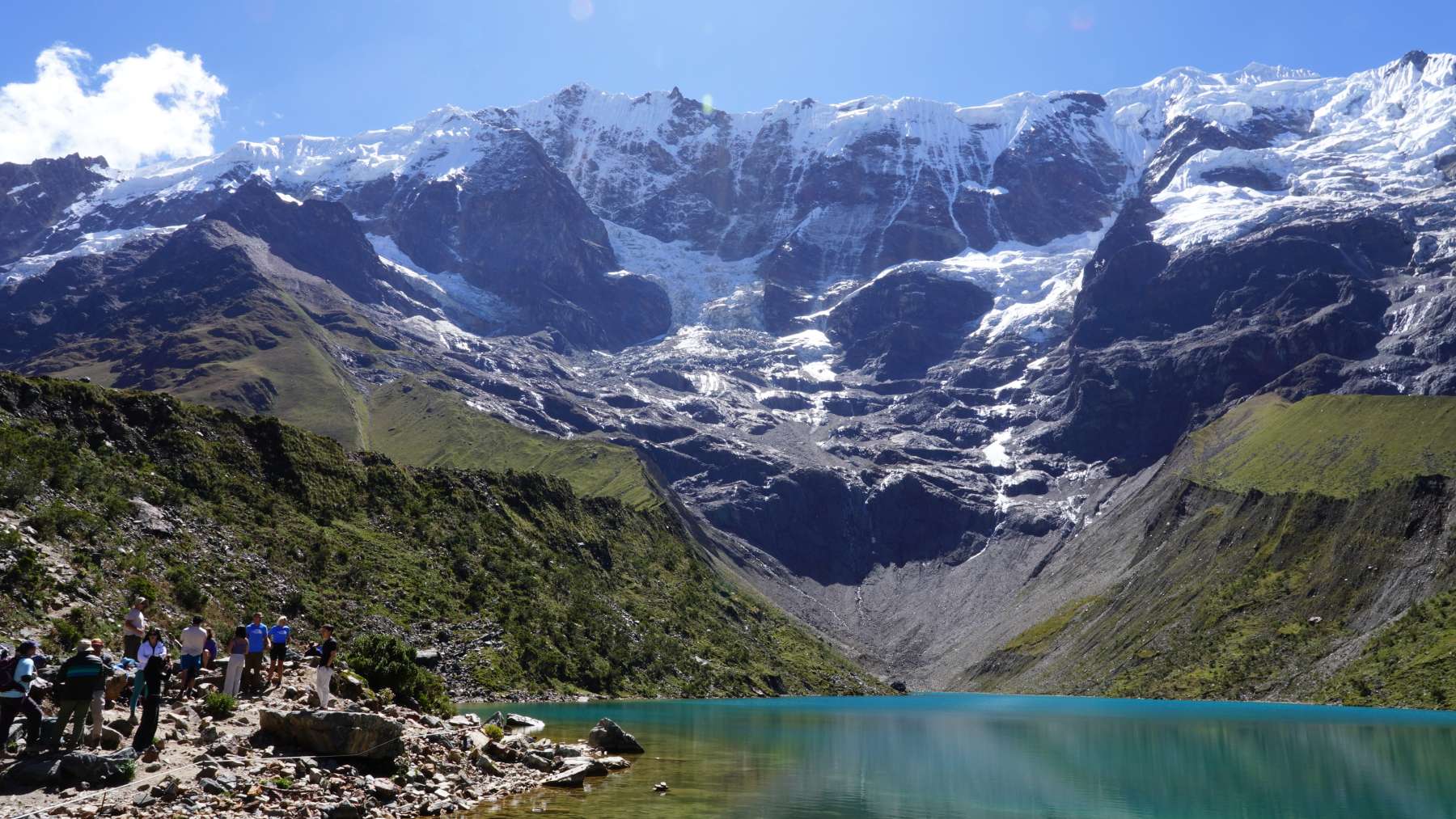
There are few places that offer such dramatic and captivating biological transformations. The initial sections of the trail wind through arid grasslands, lakes and glaciers. Lake Humantay, with its mesmerising turquoise hue, is the first tangible sign of the eternal thaw. In Soraypampa, you can enjoy the cold, clear landscape, which is perfect for stargazing as there is no light pollution to obstruct your view of the Milky Way.
However, after reaching the rocky summit, the descent brings about a complete change in environmental conditions. Within a few hours, the temperature rises, the air becomes humid and the arid terrain gives way to lush, vigorous vegetation. Now immersed in the cloud forest, wild orchids line the path and the dense foliage provides a habitat for endemic species. The sterile sound of the highlands is suddenly replaced by the flow of waterfalls and the polyphonic trills of tropical birds.
This sudden descent into the high jungle, as experienced in places such as Chaullay and Lucmabamba, has a restorative effect on visitors. Their muscles, tense from the cold at higher altitudes, begin to relax in the subtropical warmth.
Local integration and the alchemy of high-altitude coffee
One factor setting the Apu Salkantay Ritual Trek apart is its unwavering commitment to the human and agricultural communities along the route. Its logistics avoid the isolation imposed by other forms of tourism. By staying overnight in lodges run by local families and farmers, the barrier between hosts and visitors is broken down.
In coffee-growing areas, travellers are encouraged to participate in the harvesting and roasting of coffee beans. When they visit the organic farms where Arabica coffee is grown, they are invited to take part in harvesting and roasting the beans by hand. Learning how to produce this invigorating beverage and gaining first-hand knowledge of techniques free from industrial agrochemicals adds an invaluable educational dimension. A steaming cup of coffee harvested in these regions has an earthy vigour that cannot be replicated artificially. Added to this is the opportunity to explore citrus plantations and avocado orchards, providing an extremely authentic taste experience.
Llactapata: The Secret Balcony Facing the Imperial Jewel
A proper introduction is required to reach the Citadel of the Incas. The fourth part of the itinerary includes a leisurely ascent to the Llactapata formations, one of the trip's highlights. Unlike the usual angular perspectives, this archaeological site offers a panoramic, distant view of the final destination.
Seeing the mountain ridge of Machu Picchu from afar allows you to appreciate the architectural ingenuity of this pre-Hispanic civilisation. From this quiet flank, it becomes much clearer how Inca engineers embedded their cities in perfect harmony with the terrain. The journey then continues towards the Remanso Valley and the hydroelectric plant's river machinery before finally heading towards the entrance gates adjacent to the town of Aguas Calientes.
Deciphering the Inca Bastion at Dawn
The climax of this purification expedition occurs on the fifth day. Walking in the footsteps of the ancient priests evokes a profound sense of reverence for Machu Picchu. Entering when the clouds still embrace the asymmetrical roofs creates an indescribable atmosphere. The temples' meticulous design, the Intihuatana's astronomical precision, and the fountains' sophisticated hydraulic engineering form a whole that transcends mere aesthetic admiration, inspiring reverential respect.
After purging fatigue in the surrounding jungles, the stone corridors appear under a more sacred and transcendental light. Combining the main visit with vertical excursions, such as Huayna Picchu mountain, diversifies the experience and requires additional effort in exchange for unparalleled aerial views.
The definitive reasons to embark on this hike:
The value of this offer lies not only in the distance travelled, but also in the carefully curated experiences. Here are some compelling reasons why:
- Escape the crowds: If you dislike being part of large groups of people following the same limited paths, this route encourages people to disperse and offers long periods of restorative solitude in front of enormous mountains.
- Scalable pace: The varied terrain provides just the right amount of challenge in the first two days, before offering a more contemplative trek through temperate valleys. This creates an exceptional physical balance, preventing collapse or chronic exhaustion.
- Living climate study: The landscape acts as a vast open-air classroom. You can identify the Andean and eastern slope altitude zones by actively walking through them rather than through tedious descriptive manuals.
- Ethical consumption: A direct and ethical working relationship is established with the inhabitants of indigenous communities and local producers, guaranteeing a solidarity contribution that strengthens Peru's sustainable and solidarity economy.
In short, embarking on this journey requires mental audacity and a willingness to embrace the unknown. We strongly suggest that those genuine spirits who aspire to make their mark while shaping their own souls reserve their place and plan this epic undertaking through the Apu Salkantay Ritual Trek's comprehensive resource. Don't return to your daily routine without first hearing what the high Andean mountains have to say to your innermost self. Now is the perfect time to rise above.